

Things to Know
- A damp bath rug breeds mold within 24 hours. The warm, wet underside of a rug flat on tile is the ideal environment for mildew. Drying speed is not about convenience — it is about hygiene.
- Hanging beats laying flat by 50% or more. A rug draped over a bar with air flowing on both sides dries roughly twice as fast as one laid flat on tile or a drying rack.
- Material determines base drying speed. Flat microfiber dries in 1-2 hours. Chenille in 2-3 hours. Cotton in 3-5 hours. Memory foam in 4-8 hours. You cannot change physics, but you can choose the right material.
- The dryer is the enemy of bath rug lifespan. High heat cracks non-slip backings and degrades foam. Air drying or no-heat tumble is always the safer choice.
Most bath rug problems — mold, musty smell, cracked backing — trace back to one root cause: the rug stays damp too long between uses. A rug that dries in two hours will never develop mold. A rug that stays damp for eight hours will develop mold within a week, no matter how much you paid for it or how well you wash it.
The good news: drying speed is almost entirely within your control. The hanging method, the airflow in your bathroom, and the material of the rug itself determine whether your rug dries in one hour or one day. After two years of testing bath rugs across every material, these seven methods consistently cut drying time by 50-80%. Most of them cost nothing.
Why Drying Speed Matters More Than You Think
Drying speed is not a comfort issue — it is the single largest factor in bath rug longevity and hygiene. Here is what happens at different drying times:
- Under 2 hours: No mold risk. Rug is dry before the next use. Backing stays intact. This is the target.
- 2-4 hours: Low risk. Acceptable for most bathrooms with moderate use.
- 4-8 hours: Moderate risk. Bacteria begin multiplying in the damp fibers. The rug may smell faintly musty by the next morning.
- 8+ hours: High risk. Mold spores establish colonies on the underside. The musty smell becomes persistent. The backing degrades faster because it is constantly wet.
If your rug takes more than four hours to dry between uses, at least one of the seven methods below will bring it into the safe zone.
7 Methods to Dry Your Bath Rug Faster
1. Hang it over the tub edge (the baseline method)
This is the simplest and most effective single change you can make. After every shower, drape the rug over the tub edge so both sides get airflow. Do not fold it — a folded rug traps moisture between layers. Spread it flat over the widest surface you have. A rug that takes 6 hours flat on the floor takes 2-3 hours hung over the tub edge. This method alone solves the mold problem for most bathrooms.
If your tub does not have a wide enough edge, use a towel bar, the shower door, or even drape it over the bathroom door (opened at 90 degrees). The key is airflow on both sides. A rug touching a wall on one side dries roughly 40% slower than one with air on both sides.
2. Run the exhaust fan for 20+ minutes after showering
Most bathroom exhaust fans are turned off too soon. The fan removes humidity from the air, which is what allows the rug fibers to release their moisture. Run the fan for at least 20 minutes after the last shower of the day — not just during the shower. In a windowless bathroom, the exhaust fan is the only mechanism removing moisture from the room. Without it, the humid air keeps the rug damp regardless of how you hang it.
If your bathroom does not have an exhaust fan, open a window. If neither option exists, a small portable fan ($15-20) pointed at the floor creates enough air movement to cut drying time by 30-40%. Position it so the airflow hits the hanging rug from below.
3. Choose a faster-drying material
Material is the biggest fixed factor in drying speed. If you are replacing a rug anyway, choosing a faster-drying material solves the problem permanently:
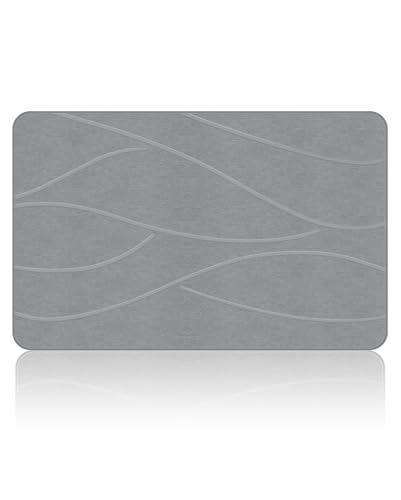
- Flat microfiber: 1-2 hours. The fastest-drying common material. Thin fibers release water quickly. See our quick-dry roundup.
- Chenille: 2-3 hours. The looped construction has more surface area for evaporation than flat fabrics. See our chenille picks.
- Cotton: 3-5 hours. Traditional and absorbent but holds water longer than synthetics. Ring-spun cotton dries slightly faster than standard cotton. See cotton vs. microfiber for the full comparison.
- Memory foam: 4-8 hours. The slowest by far. The foam core absorbs water like a sponge and releases it slowly. If you love memory foam but hate slow drying, consider a hybrid with a quick-dry surface layer.
For a deeper look at material properties, see our bath rug materials guide.
4. Use two rugs and rotate
Buy two identical rugs and alternate them daily. While one is on the floor, the other is hung up drying. This guarantees you never step onto a damp rug, and each rug gets a full 24 hours of drying time between uses. The total cost is double, but the per-rug lifespan nearly doubles too — each rug takes half the wear and gets twice the drying time. Over two years, you spend the same amount and never deal with a musty rug.
This method is especially effective with memory foam rugs, which otherwise struggle to dry between morning and evening showers in a two-person household.
5. Shake before hanging
Before you hang the rug, take it outside (or over the tub) and give it three or four vigorous shakes. Shaking mechanically removes excess water from the fibers — the same principle as shaking a wet towel. This alone can reduce drying time by 15-20% because you are removing water that would otherwise need to evaporate slowly. It takes five seconds and makes a measurable difference, especially with thick chenille and cotton rugs.
6. Wring out memory foam rugs gently
Memory foam cannot be shaken dry effectively because the water is trapped inside the foam cells, not on the fibers. Instead, press the rug flat with your hands (do not twist — twisting tears foam) to squeeze water out of the cells. Do this over the tub or outdoors. You will be surprised how much water comes out. A foam rug that was going to take 6 hours to air dry might take 3 after a thorough press. This is particularly useful after washing.
7. Avoid the dryer (or use no-heat only)
The dryer feels like the obvious solution, but high heat destroys bath rugs faster than any other single factor. One hot dryer cycle cracks rubber and TPR backings, degrades memory foam at a cellular level, and shrinks cotton fibers. The damage accumulates: three or four hot dryer cycles can reduce a rug's non-slip effectiveness by 50%.
If you must use a dryer, select the air-dry or no-heat tumble setting. The tumbling action helps remove water mechanically (like shaking), and the airflow through the drum aids evaporation — all without the heat damage. A no-heat tumble cycle for 20 minutes followed by hanging to finish drying is a reasonable compromise for people who cannot air dry completely. For a complete care guide, see how to wash bath rugs.
Drying Time by Material (Comparison Table)
| Material | Flat on Floor | Hung Over Bar | Hung + Fan | Best For |
|---|---|---|---|---|
| Flat microfiber | 3-4 hours | 1-2 hours | 45-90 min | Humid bathrooms |
| Chenille | 4-6 hours | 2-3 hours | 1.5-2 hours | Quick-dry + soft |
| Cotton | 6-10 hours | 3-5 hours | 2-3 hours | Traditional feel |
| Memory foam | 8-14 hours | 4-8 hours | 3-5 hours | Cushioning priority |
Times are approximate for a standard-size rug (20x30) in a room at 70 degrees F with moderate humidity. Larger rugs, colder rooms, and higher humidity increase times proportionally.
Special Cases
Windowless bathrooms with no exhaust fan
This is the worst-case scenario for rug drying. Without any ventilation, humid air has nowhere to go, and the rug essentially sits in a steam room. Three solutions in order of effectiveness: (1) install a basic exhaust fan ($30-80, most are DIY-friendly), (2) use a portable desk fan pointed at the floor for 30 minutes after showering, or (3) take the rug out of the bathroom entirely after each shower and hang it in a room with better airflow. Option 3 is inconvenient but free, and it works.
Shared bathrooms with multiple showers per day
When two or more people shower within a few hours, the rug never gets a full drying cycle. The two-rug rotation method (Method 4) is the best solution here. Alternatively, switch to flat microfiber — it dries fast enough that a rug used at 7 AM is dry by the time the next person showers at noon. Memory foam is the worst choice for high-traffic shared bathrooms.
After washing
A freshly washed rug is significantly wetter than one that just absorbed shower splash. After machine washing, always press or shake out excess water before hanging. Never put a dripping rug directly onto the floor. If the weather permits, outdoor drying in direct sunlight is the fastest method — UV also helps kill any remaining bacteria. On a warm, sunny day, even a memory foam rug dries in 2-3 hours outdoors. For the complete post-wash routine, see how to wash bath rugs.
What NOT to Do
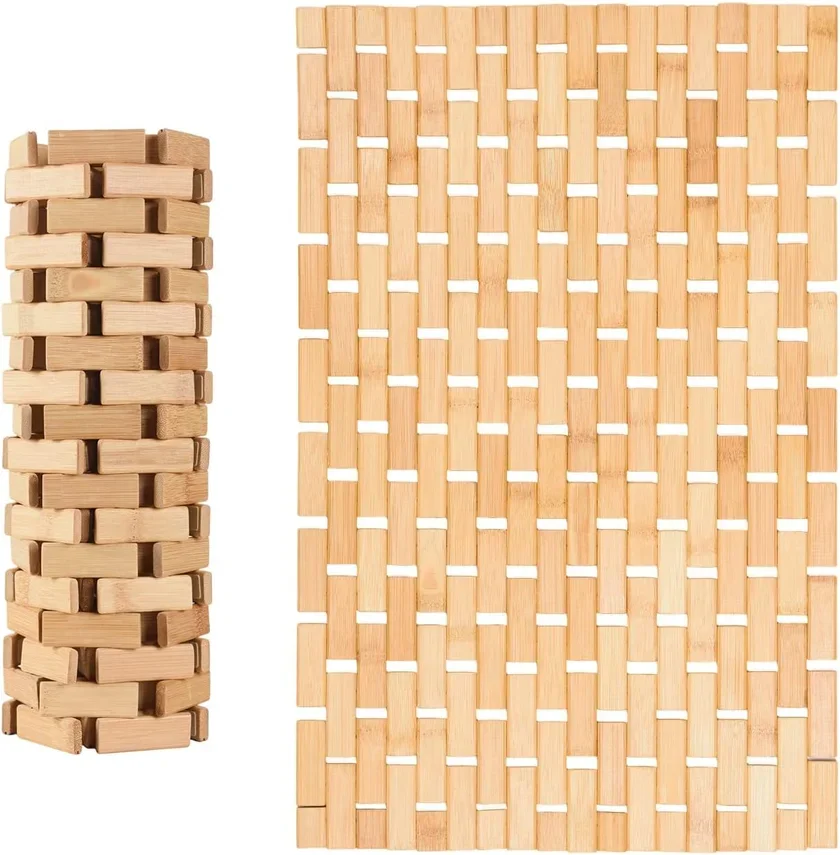
- Do not fold the rug to dry. Folding traps moisture between layers and doubles drying time. Always spread flat or drape fully open.
- Do not dry on a heated floor. Heated bathroom floors feel like they would help, but the low, consistent heat degrades rubber backings over time — similar to dryer damage, just slower.
- Do not iron a bath rug. Some people try ironing to speed drying. This scorches synthetic fibers, melts TPR backing, and provides no benefit over simple hanging.
- Do not stack rugs to dry. If you have multiple rugs, each needs its own drying space. Stacked rugs trap moisture between them and dry slower than a single rug on the floor.
- Do not put a damp rug back on the floor. If the rug is not 100% dry, leave it hanging. A damp rug placed on tile creates the exact conditions for mold growth underneath.
When Drying Speed Means You Need a New Rug
If you have tried multiple methods and your rug still takes 8+ hours to dry, the issue might be the rug itself. Memory foam rugs older than 18 months absorb more water and release it more slowly as the foam degrades. Cotton rugs that have been washed dozens of times can become permanently waterlogged. If a rug that used to dry in 3 hours now takes 6+, the material is breaking down and it is time to replace it.
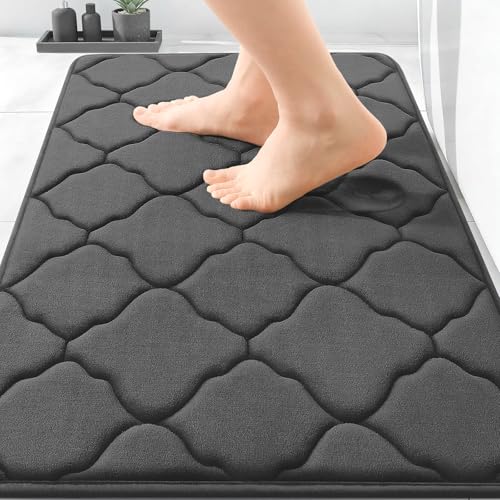
When you do replace, consider a quick-dry material if drying speed has been a persistent problem. Our best bath rugs guide covers every material and price point, and includes drying speed as a scoring criterion.
Can you put a bath rug in the dryer?
You can, but only on the lowest heat setting or an air-dry cycle.
How long does it take a bath rug to air dry?
It depends on the material and hanging method.
Frequently Asked Questions
Can you put a bath rug in the dryer?
You can, but only on the lowest heat setting or an air-dry cycle. High heat cracks rubber and TPR non-slip backings, degrades memory foam, and shrinks cotton. One hot dryer cycle causes more backing damage than six months of normal use. If you must use a dryer, select the no-heat tumble setting.
How long does it take a bath rug to air dry?
It depends on the material and hanging method. Flat microfiber dries in 1-2 hours when hung with airflow. Chenille takes 2-3 hours. Cotton takes 3-5 hours. Memory foam takes 4-8 hours or more. Hanging draped over a bar in a ventilated room cuts these times roughly in half compared to laying flat.
Why does my bath rug take so long to dry?
Three factors slow drying: material (memory foam and thick cotton hold the most water), airflow (a rug flat on tile gets no air underneath), and humidity (a windowless bathroom traps moisture). Addressing any one of these makes a measurable difference. Addressing all three can cut drying time by 80%.
Should you hang your bath rug after every shower?
Yes. Hanging the rug after every shower is the single most effective way to prevent mold, mildew, and musty odors. A rug that dries within 2-3 hours between uses will never develop mold. A rug that stays flat on damp tile for 8+ hours will, regardless of material quality.