

Things to Know Before You Buy
- Skip chlorine bleach on any white bath rug with a rubber or latex backing; it cracks and yellows the backing within a few washes.
- Oxygen-based bleach (like OxiClean) is the safest way to whiten cotton and microfiber rugs without breaking down fibers.
- Hot water sets some stains and speeds up rubber-backing breakdown, so warm water is usually the better default.
- Fabric softener leaves a waxy coating that cuts absorbency by up to half, working against the entire point of a bath rug.
- Air drying instead of machine drying protects rubber backing and keeps a white rug from yellowing under high heat.
Knowing how to clean white bath rugs properly is the difference between a mat that still looks crisp after a year and one that turns gray and dingy within a few months. White shows every trace of soap scum, hair product, and body oil that darker colors hide, so the wash method matters more here than it does for almost any other rug color.
This guide walks through the exact steps for pretreating stains, choosing the right water temperature, and drying a white bath rug without wrecking the rubber backing that most mats rely on for grip. Follow the order below and you'll get results closer to a fresh-out-of-the-package mat instead of a dingy one that fades a little more with every wash.
What You'll Need
- Supplies: oxygen-based bleach powder to whiten the rug, free-and-clear laundry detergent, and white vinegar for the rinse
- Tools: a washing machine and a soft-bristle scrub brush
Step 1: Shake Out Loose Debris and Check the Backing
Take the rug outside or over a trash can and shake it hard for 20 to 30 seconds. This knocks loose the hair, lint, and grit that build up in the pile, and it keeps that debris from clumping around your washing machine's drain during the cycle.
While you have it in hand, flip the rug over and run your fingers across the backing. Look for cracked, peeling, or flaking rubber or latex. A backing that's already breaking down will shed small rubber flakes in the wash, and hot water or a dryer cycle only speeds up the damage. If the backing is intact, you're clear to start the actual cleaning process for your white bath rug.
Step 2: Pretreat Stains and Gray Patches
Mix oxygen-based bleach powder with a small amount of warm water until it forms a thick paste, then spread it over any yellowed edges, soap scum patches, or visible stains on the white bath rug. Let it sit for 15 to 20 minutes. Oxygen bleach breaks down the organic buildup that turns white rugs gray without weakening cotton or microfiber fibers the way chlorine bleach does.
For heavier stains, work the paste in gently with a soft-bristle brush in small circles rather than scrubbing hard in one direction, which can fray the pile. Rinse the pretreated area with cool water before loading the rug into the machine so you're not diluting the paste before it has time to work.
Step 3: Wash With Oxygen Bleach and the Right Water Temperature
Load the white bath rug into the washing machine along with one or two bath towels for balance, since a rug alone can throw the drum off during the spin cycle. Add free-and-clear laundry detergent plus a scoop of oxygen bleach directly to the drum, and set the machine to a warm water cycle rather than hot. Warm water lifts soil and soap residue effectively without accelerating the breakdown of rubber or latex backing the way hot water does.
Skip fabric softener. It coats fibers in a waxy residue that can cut a rug's absorbency by 30 to 50 percent, which defeats the purpose of a bath mat. If you want softer fibers and no residue, add half a cup of white vinegar to the rinse cycle instead.
Step 4: Dry Without Damaging the Backing
Lay a white bath rug with rubber or latex backing flat to air dry, ideally outdoors in direct sun or draped over a shower rod indoors. High dryer heat softens and eventually cracks rubber backing, and that damage shows up as bald patches and slipping within a few months. Sunlight also has a mild natural bleaching effect, which helps a white rug look brighter without any extra chemicals.
If your rug has no rubber backing, such as a plain cotton bath mat, you can tumble dry it on low heat. Pull it out slightly damp and finish air drying flat, since over-drying cotton makes it stiff and can shrink it over repeated cycles.
Step 5: Keep It White Between Washes
Wash a white bath rug every five to seven days. Bathrooms are humid, and a rug that sits damp for more than a day or two starts developing the gray, slightly musty look that's hard to fully reverse later. A consistent weekly wash keeps soap scum and body oils from building into a stain that needs heavy pretreatment.
Between washes, blot up toothpaste splatters, makeup, or hair product spills as soon as you notice them with a damp cloth and a dab of dish soap. Catching a stain within minutes instead of days is the single biggest factor in whether a white rug stays white or slowly turns yellow.
Common Mistakes to Avoid
The most common mistake with a white bath rug is reaching for chlorine bleach because it seems like the strongest option. Chlorine bleach does whiten cotton short term, but it breaks down rubber and latex backing fast, and repeated use weakens fibers until the rug develops thin, worn patches. Oxygen-based bleach gets you the same brightening without that tradeoff.
Washing in hot water is another frequent error. Hot water feels like it should clean better, but it accelerates backing breakdown and can shrink cotton fibers over time. Warm water cleans the soap scum, body oil, and hair that make up most bath rug soiling with equal effectiveness.
Skipping the pretreatment step is a mistake too. Tossing a stained rug straight into the machine without loosening the stain first means the wash cycle has to do all the work, and it usually can't. A few minutes with an oxygen bleach paste before washing makes a real difference in the final result.
Letting a rug sit damp for days before washing lets soap scum and mildew set in, and drying white bath rugs on high heat when they have rubber backing cracks that backing within a few cycles. Each of these mistakes is easy to avoid once you know the wash cycle and drying method that actually protect the fibers and the backing at the same time.
Our Top Picks
If you want a rug that actually stays white after repeated washing, these three options hold up well based on their fiber construction and the backing details in their listings and verified buyer feedback.

Editor’s Pick
Yimobra Bathroom Rug Mat Non
A soft microfiber mat with a low profile that owners consistently describe as easy to keep bright with regular oxygen-bleach washing.
$11.99
Check Price on Amazon
Best Value
Superior Heavyweight Cotton Bath Mats
100 percent cotton construction that tolerates the frequent warm washing and oxygen bleach that white rugs need most.
$22.55
Check Price on Amazon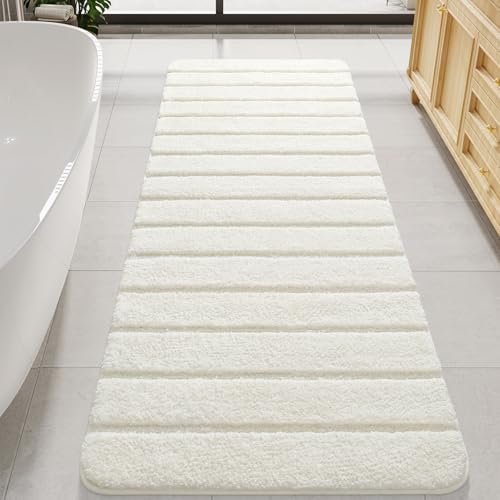
Premium Choice
LOCHAS Long Bathroom Rugs Runner
An extra-long runner for covering a full vanity or hallway stretch instead of a single mat placed in front of the tub.
$19.99
Check Price on AmazonFrequently Asked Questions
Can I use bleach on a white bath rug with rubber backing?
Avoid chlorine bleach on any rug with rubber or latex backing since it breaks the material down and causes cracking and yellowing within a handful of washes. Oxygen-based bleach, like OxiClean, whitens the fabric safely without attacking the backing.
How do you get a gray bath rug white again?
Soak the rug in a paste of oxygen bleach and warm water for 15 to 20 minutes, focusing on gray or yellowed patches, then wash it on a warm cycle with free-and-clear detergent. Most graying comes from soap scum and body oil buildup, and oxygen bleach breaks both down without damaging fibers.
Can white bath rugs go in the dryer?
Only if the rug has no rubber or latex backing. Backed rugs should air dry flat, since dryer heat cracks and peels the backing over time. Plain cotton mats without backing can tumble dry on low heat and finish air drying if they're still damp.
How often should you wash a white bath rug to keep it white?
Wash it every five to seven days. Bathroom humidity keeps a rug damp between showers, and letting that sit for longer than a week lets soap scum and mildew set into a stain that's much harder to pretreat out later.
Does vinegar whiten bath rugs?
White vinegar doesn't bleach fabric, but it cuts through the mineral and soap residue that dulls white fibers over time, and it works as a natural fabric softener substitute in the rinse cycle. For actual whitening, oxygen bleach in the wash cycle does the heavier lifting.
Verdict
Getting how to clean white bath rugs right comes down to a few consistent habits: pretreat stains before they set, use oxygen bleach instead of chlorine, wash on warm rather than hot, and skip the dryer for anything with a rubber backing. None of these steps take much extra time, but skipping them is exactly why so many white rugs turn gray within a few months of regular use.
If you're shopping for a rug that's easier to keep bright in the first place, the Yimobra Bathroom Rug Mat Non is a solid starting point. Its microfiber construction responds well to the oxygen-bleach method described above, and its low profile means less surface area for soap scum and water spots to collect. Pair the right rug with a weekly wash routine and you'll spend a lot less time pretreating stains and a lot more time with a bath mat that actually looks white.