The Best What Materials Work Best for Bathroom Rugs to Keep Them Dry and Soft (2026)
Prices and picks verified as of October 2026. Independent, reader-supported reviews.


Things to Know Before You Buy
- Absorbency and drying speed work against each other. The materials that hold the most water (cotton, thick chenille, memory foam) take the longest to dry out.
- Microfiber chenille is the best all-rounder for most bathrooms: soft underfoot, fast to grab water, machine washable, and cheap to replace.
- For a damp, poorly ventilated bathroom, a quick-dry waffle weave or a diatomaceous-earth stone mat beats a plush rug that stays soggy.
- The backing matters as much as the fiber. A rubber or TPR non-slip base keeps you safe but breaks down faster under heat.
- Skip anything that isn't machine washable. A bathroom rug gets damp daily, and one you can't wash easily will smell within weeks.
Step out of the shower onto the wrong bath rug and your feet find out fast: a thin, slippery mat that ignores the puddle under you, or a plush one that soaked up last night's drips and stayed wet. You pick the fiber, and the fiber settles both problems. Shop on looks alone and you skip that decision.
The short version: for most bathrooms, a microfiber chenille rug hits the sweet spot of soft, absorbent, and easy to wash. If your bathroom runs damp and stays that way, a quick-dry waffle weave or a diatomaceous-earth stone mat serves you better because it dries between uses. Cotton stays the classic plush option, and memory foam wins on comfort but holds water the longest.
Below, I walk through what each material does under your feet, how the main types compare on absorbency, softness, and drying speed, and how to match one to your bathroom. I also cover the mistakes that turn a good rug into a damp, smelly one, and how to make whichever material you pick last.
What You Need to Know
A bathroom rug juggles two jobs that fight each other. First, it pulls water off your feet and the floor so you stop tracking moisture across the house. Second, it feels good underfoot, warm and soft instead of cold and flat. Your choice of fiber sets how well a rug handles each job, and few fibers do both well.
Absorbency comes down to how the fibers handle water. Cotton fibers swell and trap moisture inside them. Microfiber and chenille lean on sheer surface area, thousands of tiny looped strands, to wick water fast. Memory foam barely absorbs on its own; the plush cover does the soaking while the foam adds cushion. Stone mats take another route, pulling water into a porous mineral surface where it evaporates within minutes.
The trade-off is drying speed. The more water a material holds, the longer it stays damp, and a rug that sits wet for hours breeds the mildew behind that musty bathroom smell. Read "ultra-absorbent" as "slow to dry." Two more factors round out the picture: pile height and density (taller, denser pile feels plusher but traps more moisture) and the backing, which keeps the rug from sliding and tends to wear out first. Track those tensions and the rest of the choice falls into place.
Types and Categories
Cotton is the traditional choice and still a strong one. It soaks up water, feels soft, and washes hot and tumble dries with less fuss than anything else. The downside: thick cotton stays damp a while, and cheaper cotton rugs flatten and fray after a year of regular washing. A good cotton rug makes the safe default if you wash often.
Microfiber and chenille (both polyester) own the budget and mid-range market for good reason. The looped chenille pile feels plush, grabs water on contact, and dries faster than thick cotton. It also costs the least to replace. The honest drawback is longevity: the fibers mat down and shed over a year of frequent washing.
Memory foam rugs wrap a microfiber cover over a foam core, so they feel padded and plush underfoot. You get the most comfortable surface to stand on, but the foam holds water, dries the slowest of the bunch, and crumbles if you tumble dry it. Save them for well-ventilated bathrooms or a spot just off the bedroom.
Quick-dry options answer back. Thin waffle-weave cotton and low-pile microfiber trade plushness for fast drying, while diatomaceous-earth stone mats form their own category: hard, fast-drying, low-maintenance, and firm enough to crack if you drop one. Bamboo mats sit alongside them and put water resistance and a spa look ahead of softness.
How to Choose
Start with your bathroom, not the rug. One question outranks the rest: how well does the room dry out? If a window or a strong exhaust fan clears the air within an hour of a shower, you can run a plush, absorbent material like chenille or memory foam at low risk. If your bathroom stays humid, lacks a fan, or sees back-to-back showers from a busy household, put drying speed first: a waffle weave, low-pile microfiber, or a stone mat stays fresher than anything thick.
Next, think about who uses the rug. For kids or elderly family members, a firm non-slip backing and a low, stable profile beat plushness, since a thick rug trips people and a slippery one sends them down hard. For a quiet guest bath nobody touches midweek, comfort can win over function. Match the rug to the traffic it gets.
Then factor in washing. Be honest about how often you'll run a load. If the answer is "weekly," microfiber and cotton take frequent washing best and cost little to swap out; check our machine-washable picks. If you'd rather skip laundry, a stone mat barely asks for it. Memory foam demands the most care of the soft options because heat damages the foam.
Last, get the size and backing right. A rug should land where you step out, with enough coverage to catch drips but not so much that it crowds the door swing. Whatever the fiber, insist on a real non-slip backing or plan to slide a separate gripper pad underneath. The softest rug going is worthless if it skates across wet tile.
Common Mistakes to Avoid
The biggest mistake is buying on plushness alone. A deep, fluffy rug looks great in the store photo, but in a bathroom that holds humidity, that thickness turns into a sponge that sits damp and smells within weeks. Match the material to your ventilation first, then worry about how soft it feels.
The second mistake is ignoring the backing. Plenty of good-looking rugs ship with a thin, smooth underside that slides the moment the floor gets wet, which annoys you on a good day and drops you on a bad one. If a rug doesn't advertise a non-slip base, assume it has none and budget for a gripper pad.
You can also oversize the rug, then fail to fit it in the washing machine, so it goes weeks between washes. Buy a size you can launder at home. And don't assume a rug is machine washable; some memory foam and bonded backings break down in the wash, so read the care label before you buy, not after. One last habit kills rugs of any material: leaving them flat and wet on the floor all day. Hang yours up between uses from day one.
Care and Maintenance
One habit stretches any rug's life more than the rest: dry it out between uses. Drape it over the tub edge or a towel bar after a busy morning instead of leaving it flat on the floor. An hour of air circulation heads off most of the mildew and odor you'd otherwise blame on the rug itself. Thick chenille and memory foam hold the most water, so this counts double for them.
For washing, cotton and microfiber forgive the most: machine wash on warm or cold and tumble dry on low. Skip fabric softener, which coats the fibers and cuts absorbency over time. Wash once a week in a busy bathroom, every two weeks in a guest bath. Our step-by-step washing guide covers the details.
Memory foam breaks the pattern: wash the foam core on cold and air dry it flat, since dryer heat crumbles the foam and warps the rug. The rubber or TPR non-slip backing on any rug also hates heat, so low or no heat keeps it from cracking and flaking. Stone and bamboo mats ask the least of you; wipe them down now and then, and sand a stone mat lightly when the surface stops drinking water.
Our Top Picks
If you'd rather skip to a material that works, we'd steer you toward these three. Each one owns a different priority: an everyday all-rounder, a comfort-first option, and an absorbent grippy mat for the wettest spots.
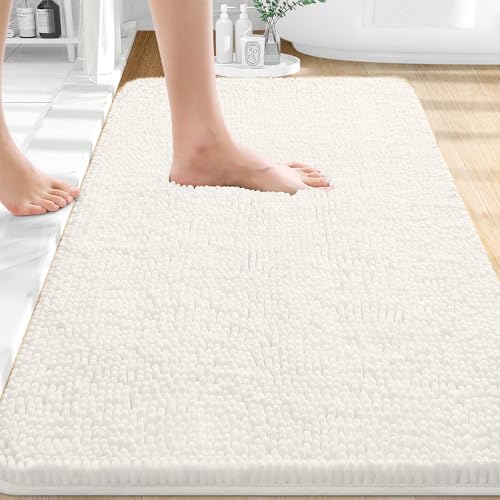
Editor’s Pick
OLANLY Bathroom Rugs 30x20 Extra
A plush microfiber chenille rug that hits the everyday sweet spot: soft underfoot, quick to grab water, and easy to machine wash.
$25.88
Check Price on Amazon
Best Value
Vive Toilet Seat Cushion (Soft
A cushioned, padded option for comfort-first shoppers who want something soft to stand on and don't mind a little extra drying time.
$32.99
Check Price on Amazon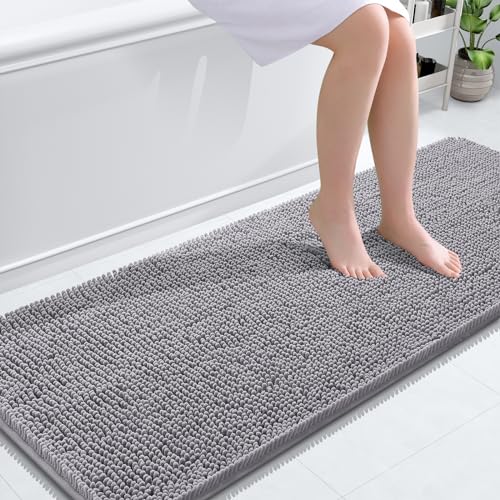
Premium Choice
OLANLY Long Bathroom Runner Rug 59x24
A long 59x24 chenille runner that's soft and absorbent underfoot, machine washable, with a non-slip backing for a long vanity or double sink.
$42.89
Check Price on AmazonWhat bathroom rug material is the most absorbent?
Cotton and dense microfiber chenille top the list for absorbency.
Which bath rug material dries the fastest?
Diatomaceous-earth stone mats win by a wide margin, often drying within minutes, because the porous stone pulls moisture down and evaporates it off the surface.
Frequently Asked Questions
What bathroom rug material is the most absorbent?
Cotton and dense microfiber chenille top the list for absorbency. Cotton fibers swell to soak up a lot of water, while chenille's thousands of looped polyester strands grab moisture fast off wet feet. The catch: the more water a rug holds, the longer it takes to dry, so absorbency and quick-drying pull against each other.
Which bath rug material dries the fastest?
Diatomaceous-earth stone mats win by a wide margin, often drying within minutes, because the porous stone pulls moisture down and evaporates it off the surface. Among soft fabrics, thin waffle-weave cotton and low-pile microfiber dry fastest, while thick memory foam and dense shag hold water longest and stay damp for hours in a bathroom with no fan.
What is the softest bathroom rug material?
Memory foam topped with microfiber chenille feels softest underfoot: the foam core cushions your step while the plush surface stays gentle on bare feet. Pure chenille and high-pile cotton come close but lack the sink-in give, so they feel plush rather than padded.
Are memory foam bath rugs worth it?
They earn their price if comfort tops your list and your bathroom dries out well, because little beats that padded feel underfoot. The trade-offs bite, though: memory foam holds water and takes a long time to dry, and the foam core crumbles if you tumble dry it, so you air dry it flat instead. In a humid bathroom with no fan, a faster-drying material is the smarter buy.
How long should a bathroom rug last?
With weekly washing, count on one to two years from an affordable microfiber or cotton rug before the pile flattens or the non-slip backing cracks and flakes. Stone and bamboo mats last far longer, since they have no fabric to wear out. Two habits stretch a rug's life the most: drying it between uses and washing on low heat.
Verdict
No material wins every bathroom, but one wins yours, and it comes down to a single question: how well does your bathroom dry out? With decent ventilation, a microfiber chenille rug gives you the best balance of soft, absorbent, washable, and affordable, which is why we hand it to most readers first. If your bathroom stays damp, lean toward a quick-dry waffle weave or a diatomaceous-earth stone mat that won't sit soggy and turn sour. Pick cotton if you want plushness and wash often, and save memory foam for spots where comfort outranks fast drying. Whatever you choose, insist on a real non-slip backing, buy a size that fits your washing machine, and build the habit of hanging the rug up to dry between uses. Nail those three and most decent materials will keep your feet dry and your floor safe for years. Round out the room while you're at it: a towel warmer adds the spa touch, smart bathroom storage reclaims your space, a matching soap dispenser finishes the counter, the right bathroom mirror opens up the wall, and a modern bathroom faucet ties the look together.