Stone Bath Mat vs. Fabric Bath Rug: Which Should You Buy? (2026)
Prices and picks verified as of September 2026. Independent, reader-supported reviews.

Things to Know Before You Buy
- A stone bath mat dries in about 30 to 60 minutes; a fabric bath rug can take several hours.
- Stone resists mildew far better than fabric because it doesn't hold water inside fibers.
- Fabric bath rugs are machine washable; stone bath mats need wiping and occasional light sanding.
- Prices overlap for both categories, roughly $20 to $45, so cost rarely decides the choice alone.
- Stone typically lasts several years without replacement; fabric rugs usually need swapping within one to two years.
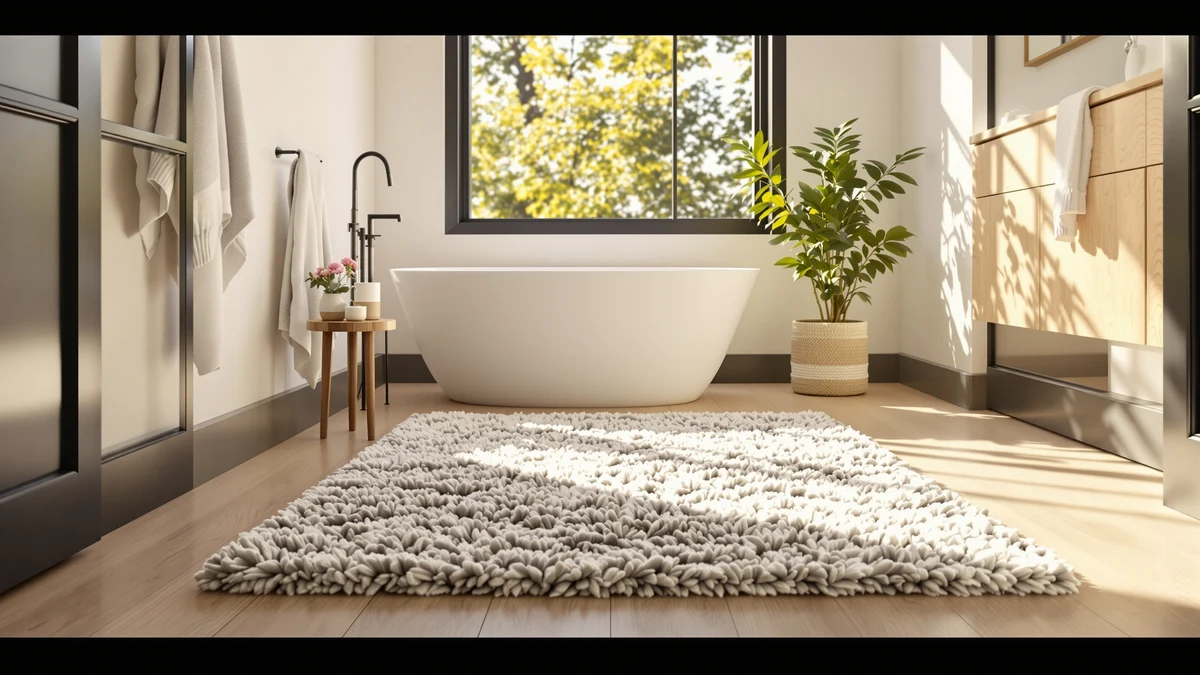
The stone bath mat vs fabric bath rug decision usually comes down to one bathroom habit: how much you want to feel when you step out of the shower. Stone mats use a fast-drying diatomite or volcanic-rock surface that pulls water off your feet in seconds, while fabric rugs use cotton, chenille, or microfiber pile that feels soft underfoot but holds moisture longer. Both solve the same problem, a wet bathroom floor, but they solve it in opposite ways.
We compared specs, verified owner reviews, and pricing across both categories to figure out which one actually fits your bathroom. Neither type wins outright. A stone mat suits a household that showers back to back and wants a dry floor fast, while a fabric rug suits anyone who wants warmth and cushion underfoot in the morning. The right choice depends on your flooring, your climate, and how many people share the bathroom.
Quick Answer
For most households, a stone bath mat wins on hygiene and drying speed, since the porous surface dries within an hour and resists mildew far better than fabric. Fabric bath rugs win on comfort and quiet, since they cushion bare feet and don't feel cold against skin the way stone can. If you shower multiple times a day or live somewhere humid, pick stone. If comfort and a plush feel top your list, pick fabric.
What is Stone Bath Mat?
A stone bath mat is a flat slab made from crushed diatomite, volcanic rock, or an engineered stone composite, bonded into a rigid or semi-flexible tile roughly the size of a standard bath mat. The material is naturally porous, so it absorbs water on contact and wicks it toward the surface, where it evaporates within 30 to 60 minutes depending on humidity. Most stone mats ship with a non-slip rubber or silicone backing, and manufacturers usually recommend a quick surface sand every few months to keep the pores from clogging with soap residue and oil.
Comparing a stone bath mat vs fabric bath rug at this stage mostly comes down to material behavior, since stone doesn't absorb water the way fiber does. It moves water through and lets it evaporate, which is why stone mats feel dry to the touch almost immediately after use, even though water is still present inside the material. Weight is another defining trait: most stone mats run one to three pounds heavier than an equivalent fabric rug, which keeps them anchored on tile but makes them awkward to shake out or hang-dry. Colors are limited mostly to natural stone tones, gray, beige, and terracotta, since the material isn't dyed the way fabric is.
What is Fabric Bath Rug?
A fabric bath rug is a woven or tufted textile mat made from cotton, chenille, microfiber, or a blended pile, backed with a rubber or latex non-slip layer. Unlike stone, fabric absorbs water into its fibers and holds it there until it air-dries or goes through a wash cycle, which typically takes several hours longer than a stone surface needs. That trade-off buys softness: a plush chenille or cotton pile feels warm underfoot, especially in colder months, and it muffles footsteps in a way a hard stone surface can't.
Fabric rugs also come in far more colors, patterns, and pile heights, so they double as a decor element as well as a functional mat. Machine washability is the other big advantage in a stone bath mat vs fabric bath rug comparison, since most fabric rugs go straight into a washing machine on a normal cycle, while stone mats need hand cleaning or light sanding. The downside is moisture retention: a rug left damp between showers can develop a musty smell or mildew spots faster than stone, particularly in bathrooms with limited ventilation. Pile height matters for cleaning too, since deep chenille traps more hair and lint than a low-pile cotton weave.
Head-to-Head: Build Quality & Durability
Stone bath mats hold up structurally better over time than most fabric rugs. The rigid composite doesn't fray, pill, or lose its non-slip backing the way a washed-and-dried textile eventually does, and owners of stone mats commonly report years of use without visible wear beyond minor surface scuffing. Fabric rugs face more predictable wear: repeated washing thins the pile, the rubber backing can crack or peel after a year or two of hot-water cycles, and stitched edges can start to fray on cheaper models.
Stone isn't indestructible, though. A dropped bottle or a hard fall can chip or crack a stone mat, and once that happens the mat is done, with no repair option. A fabric rug in the same scenario gets stained or worn, not broken. Reviewers comparing a stone bath mat vs fabric bath rug for long-term durability generally favor stone for households that keep the same mat in place for years, and favor fabric for households that replace bath mats every season as part of a decor refresh. Non-slip performance stays close on both when new, though stone's grip depends more on textured finish quality, and cheaper stone mats can turn slippery once the surface polishes down from repeated foot contact.
Head-to-Head: Price & Value
Entry-level stone bath mats and fabric bath rugs land in a similar price band, roughly $20 to $45 for a standard-size mat, so upfront cost rarely decides a stone bath mat vs fabric bath rug purchase on its own. The categories split on replacement frequency instead. A fabric rug that gets washed weekly and used daily often needs swapping within one to two years as the pile flattens and the backing wears, while a stone mat can last several years without replacement since there's no fabric to break down.
Over a five-year span, that makes stone the better value on paper, even when the initial price runs a few dollars higher. Fabric keeps one advantage: if a rug looks worn or dated, replacing it costs little and refreshes the whole bathroom's look, something a neutral-toned stone mat can't offer in the same way.
Head-to-Head: Use Experience
Day to day, the difference between a stone bath mat and a fabric bath rug shows up the moment you step out of the shower. Stone feels cool and slightly textured underfoot at first contact, which some owners love for the wake-up effect and others find unpleasant on a cold morning. Fabric feels warm and soft immediately, closer to stepping onto a cushioned surface, and it stays comfortable even in an unheated bathroom during winter. A stone mat can feel harder and less forgiving if you set a foot down quickly, while a fabric rug absorbs impact and stays quiet.
Cleaning routine changes the daily experience too. A stone bath mat vs fabric bath rug side by side means one gets wiped down and left to air-dry in place, while the other gets shaken out, hung, or tossed in the wash on a rotation. Households with kids or pets tend to favor fabric for the softer landing and the ease of tossing a rug in the machine after a mess, while households focused on hygiene and quick turnaround between showers lean toward stone for how fast it resets to dry.
When to Choose Stone Bath Mat
Choose a stone bath mat if your household showers multiple times a day and you want the floor dry before the next person steps in. Stone works especially well in humid climates or poorly ventilated bathrooms, where a damp fabric rug would take hours to dry and risk mildew. It also suits anyone who wants a low-maintenance mat that doesn't need weekly washing, since a quick wipe-down and occasional light sanding keeps it functional for years. If your bathroom has a minimalist or spa-style look, natural stone tones tend to fit better than a patterned textile. Skip stone if you have young kids who play on the bathroom floor, since the harder surface offers less cushion for a fall, or if you want a rug that changes with your seasonal decor.
When to Choose Fabric Bath Rug
Choose a fabric bath rug if comfort matters more than drying speed, especially in a household with one or two people showering at a normal pace rather than back to back. Fabric suits colder climates and bathrooms without underfloor heating, where a warm, cushioned mat makes the morning routine more pleasant. It's also the better pick if you like refreshing your bathroom's look seasonally, since fabric rugs come in far more colors and patterns than stone ever will. Families with small children or anyone concerned about a hard landing near a slippery shower exit tend to prefer the extra cushion fabric provides. Skip fabric if your bathroom stays humid most of the day or if you're not willing to wash the rug weekly, since a damp rug left in place is where mildew problems start.
Our Top Picks
If you're leaning toward stone after reading the comparison above, these three stone bath mats stand out for surface quality, drying speed, and price.
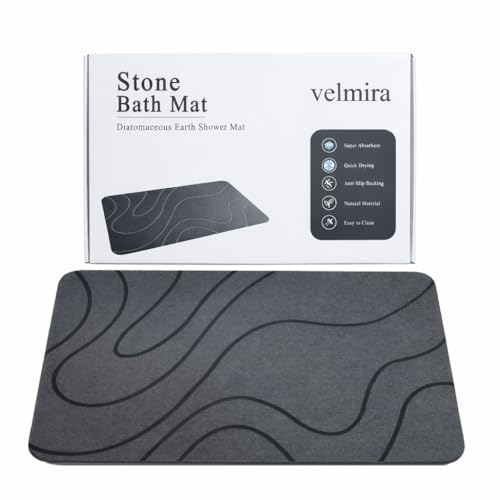
Editor's Pick
velmira Stone Bath Mat Quick
Quick-drying diatomite surface with a non-slip backing that holds up on tile, and the easiest all-around pick for most bathrooms.
$28.99
Check Price on Amazon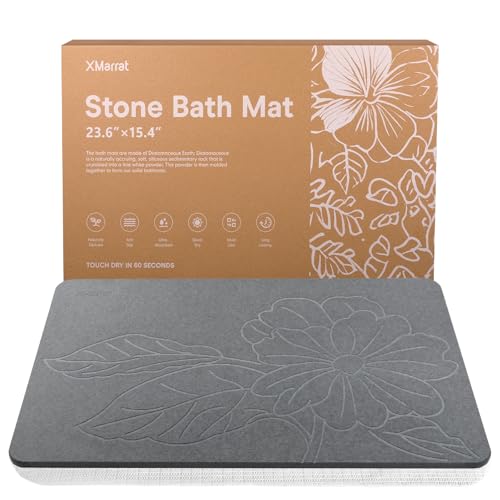
Best Value
XMarrat Stone Bath Mat Large
A larger surface at nearly the same price as the smaller pick, good for households that want more coverage without paying a premium.
$29.99
Check Price on Amazon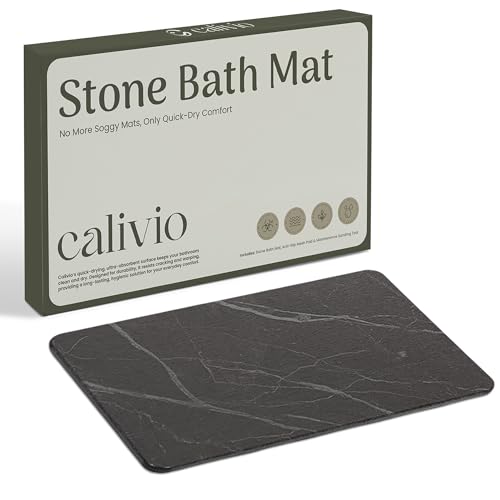
Premium Choice
Calivio Quick Dry Shower Stone
A thicker composite build with reinforced edges, aimed at anyone who wants the sturdiest stone mat on the list.
$41.97
Check Price on AmazonIs a stone bath mat better than a fabric bath rug?
Neither one is better across the board.
Do stone bath mats actually dry as fast as advertised?
Most stone bath mats dry within 30 to 60 minutes under normal bathroom humidity, based on owner reports and manufacturer specs.
Frequently Asked Questions
Is a stone bath mat better than a fabric bath rug?
Neither one is better across the board. A stone bath mat dries faster and resists mildew, while a fabric bath rug feels warmer and softer underfoot. The stone bath mat vs fabric bath rug choice depends on how often your household showers and how much you value comfort versus quick drying.
Do stone bath mats actually dry as fast as advertised?
Most stone bath mats dry within 30 to 60 minutes under normal bathroom humidity, based on owner reports and manufacturer specs. A fabric bath rug of the same size typically needs several hours to fully air-dry, longer if the bathroom has poor ventilation.
Can you wash a stone bath mat in a washing machine?
No. Stone bath mats should be wiped down with a damp cloth and occasionally sanded lightly to keep the pores from clogging. Fabric bath rugs, by contrast, are usually machine washable on a normal cycle, which is one of their main advantages over stone.
Are stone bath mats safe for kids and older adults?
Stone bath mats with a textured, non-slip surface perform well for grip, but the hard material offers less cushion than a fabric rug if someone falls. Households with young children or anyone unsteady on their feet often lean toward a fabric bath rug for the extra padding.
Which one lasts longer, a stone bath mat or a fabric bath rug?
A stone bath mat typically lasts several years without replacement since there's no fabric to wear out. A fabric bath rug usually needs replacing within one to two years of regular washing and daily use, though it costs less to replace when that time comes.
Final Verdict
Weighing a stone bath mat vs fabric bath rug comes down to your bathroom's humidity, how many people share it, and whether you value quick drying over cushioned comfort. Stone wins for hygiene and speed, fabric wins for warmth and style, and most households can make either work well. If you're leaning stone, the velmira Stone Bath Mat Quick above is the simplest place to start.