Bath Rug vs Matt (2026)
Prices and picks verified as of October 2026. Independent, reader-supported reviews.

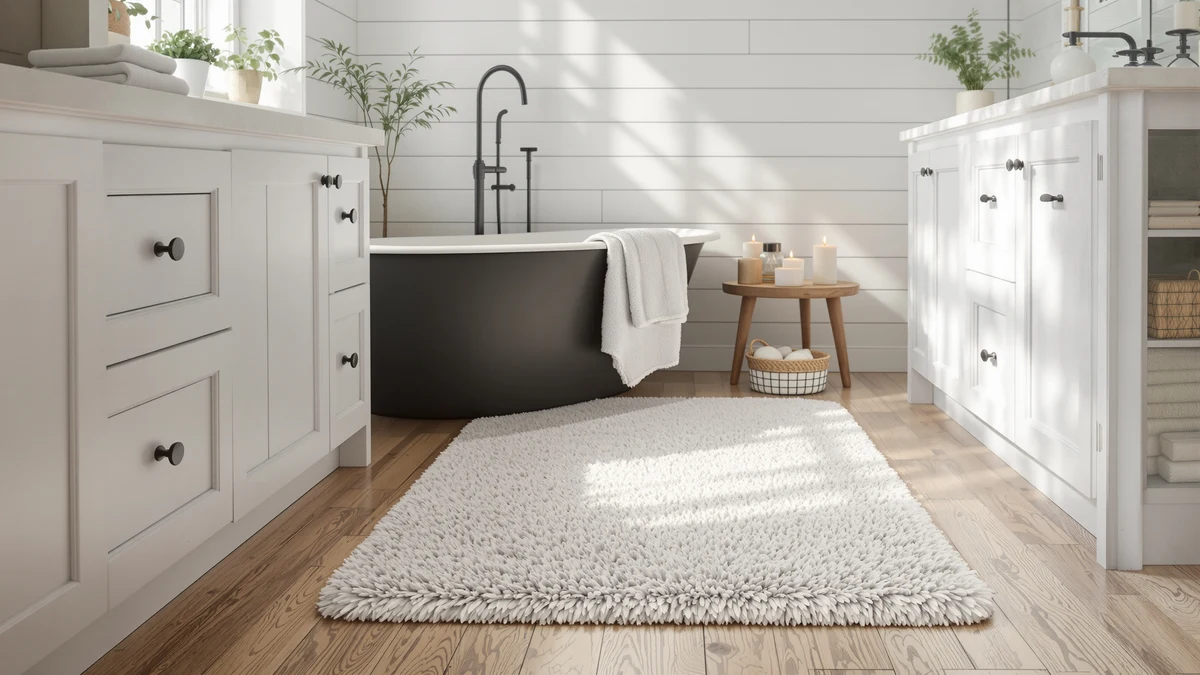
Things to Know Before You Buy
- A bath rug is a soft fabric textile made for the floor outside your tub. A bath matt is usually a rubber or vinyl surface built for the wet zone inside or right beside the tub.
- Most bathrooms benefit from both, not one or the other. They cover different jobs: comfort and warmth versus grip and water shedding.
- A budget bath rug like the Yimobra at $9.49 costs less than most quality matts but needs replacing sooner.
- Rugs need weekly washing to avoid mold. Matts need only an occasional rinse.
- If your floor is cold tile and you want cushioning underfoot, a rug wins. If your priority is slip resistance on a wet surface, a matt wins.
The bath rug vs matt question comes up the moment you step out of the shower onto a cold floor and realize the soft textile under your feet and the rubber surface inside your tub are not interchangeable. One is built for comfort, the other for grip, and mixing up their jobs is how people end up with a rug that gets waterlogged inside the tub or a hard matt sitting uselessly on dry tile.
We compared the two categories on build quality, price, and day-to-day use to help you figure out which one your bathroom actually needs, and whether you need both. Our picks below cover the bath rug side of that decision, drawn from the products we researched and track pricing for.
Quick Answer
A bath rug is better for the floor outside your tub, where you want softness and absorption. A bath matt is better for the wet zone inside or beside the tub, where you need grip and quick drying. For most people, the bath rug vs matt debate is not a contest since your bathroom benefits from both, but if you can only buy one, a non-slip bath rug like the GORILLA GRIP at $17.99 solves more everyday problems for most floors.
What is Bath Rug?
A bath rug is a fabric floor covering placed outside the shower or tub, sized to catch drips and give you a warm, dry surface to stand on. Manufacturers build them from chenille microfiber, cotton, or memory foam, each with a different feel and drying time. Most come with a non-slip backing, usually TPR (thermoplastic rubber) or a latex coating, that grips tile or vinyl flooring.
Unlike a hard surface, a bath rug absorbs water into its fibers rather than shedding it. That absorbency is the whole point: you step out of the shower dripping, and the rug pulls moisture off your feet instead of leaving puddles on the floor. The tradeoff is that absorbed water has to go somewhere, which means regular washing and air drying to keep mold and odor from building up in the fibers.
Prices for bath rugs we researched range from about $9 for a basic chenille mat like the Yimobra to $40 or more for thicker memory foam options like the OLANLY. Owners report that thickness and pile density matter more than price alone when it comes to how plush a rug feels underfoot, and reviewers consistently note that rubber-backed models stay in place noticeably better than thin foam-backed ones on smooth tile.
What is Matt?
A bath matt, in the sense most shoppers mean when they search bath rug vs matt, is a rigid or semi-rigid surface designed for the wet zone rather than the dry floor beyond it. The most common version is a rubber or PVC sheet with suction cups on the underside, made to stick to the bottom of a tub or shower pan and prevent slipping on wet porcelain or fiberglass.
Some matts sit outside the tub instead of inside it, usually made from diatomaceous stone or slatted bamboo. Stone versions absorb surface water and release it through evaporation, drying within minutes. Bamboo versions let water drain through the slats to the floor beneath. Neither type behaves like fabric: they do not soak up water into fibers, and they provide little to no cushioning underfoot.
A matt's job is safety and water management, not comfort. Reviewers consistently note that suction-cup rubber matts hold their grip for one to two years before the cups lose adhesion, while stone and bamboo versions can last five years or longer since they have no moving parts and nothing to wear out.
Head-to-Head: Build Quality & Durability
On raw durability, a matt usually wins the bath rug vs matt comparison. A rubber or stone matt has no fibers to fray, flatten, or trap moisture, so its lifespan depends mostly on the suction cups (rubber) or the mineral surface (stone) rather than the material breaking down. Stone and bamboo matts commonly last five to ten years with barely any maintenance beyond wiping them down.
A bath rug's lifespan depends heavily on material and how often you wash it. Chenille microfiber, the material behind the Yimobra, GORILLA GRIP, and Smiry, typically holds up for one to three years with weekly washing. Memory foam rugs like the OLANLY compress and lose their cushioning faster, often within a year or two of daily use, because the foam core cannot fully recover after repeated compression and washing cycles.
Backing quality separates the durable rugs from the disposable ones. Owners report that thin, dot-pattern TPR backings peel away from the fabric after a year of machine washing, while full rubber backings like the one on the GORILLA GRIP hold up through dozens of wash cycles without cracking. If durability is your main concern, a full rubber-backed rug closes most of the gap with a matt, though it still will not match stone or bamboo for sheer longevity.
Head-to-Head: Price & Value
Entry-level bath rugs undercut most matts on sticker price. The Smiry chenille rug runs $8.99 and the Yimobra sits at $9.49, both cheaper than a typical rubber suction matt. Mid-range rugs like the GORILLA GRIP at $17.99 and the LOCHAS shaggy at $22.92 still land below premium stone or bamboo matts, which often start around $25 and climb past $50 for larger sizes.
Value shifts once you factor in replacement frequency. A $9 rug that needs replacing every year costs more over three years than a $25 stone matt that lasts five. If you wash your rug regularly and buy a rubber-backed model in the $15 to $25 range, the total cost of ownership narrows considerably, and the extra comfort a rug provides makes it the better value for most bathroom floors even at a slightly higher price point.
Head-to-Head: Use Experience
Day to day, the bath rug vs matt difference comes down to what your feet touch first after a shower. Step onto a bath rug and you get a soft, absorbent surface that pulls moisture away and adds a bit of warmth against cold tile. Step onto a matt outside the tub and you get a hard, cool surface with little give, which some owners prefer for hygiene reasons but most find less pleasant on bare feet.
Inside the tub, the comparison flips entirely. You want a matt there, not a rug. A fabric rug placed inside a tub becomes waterlogged within minutes and turns into a slipping hazard rather than a safety feature. A rubber matt with suction cups stays anchored to wet porcelain and gives you secure footing while you shower, something no bath rug is designed to do.
Maintenance also shapes the daily experience differently. You need to shake a rug out, hang it to dry between uses, and machine wash it every one to two weeks to prevent odor. A rubber or stone matt needs an occasional rinse and a wipe-down, with far less routine effort. If you dislike laundry chores, that gap matters more than the comfort difference.
When to Choose Bath Rug
Choose a bath rug when your priority is the floor outside the tub. You want something soft underfoot on cold tile, you are willing to wash it weekly, and your bathroom has enough ventilation to dry it between uses. A non-slip backing matters more than pile depth if your floor is smooth tile or vinyl, since a rug that slides is a hazard no matter how plush it feels.
A bath rug also makes more sense if you care about how your bathroom looks. Rugs come in dozens of colors and textures, while matts are almost entirely functional. If your bathroom has a working exhaust fan or a window and you are comfortable adding a wash cycle to your routine, a rug like the Yimobra or GORILLA GRIP covers most everyday needs at a low cost.
When to Choose Matt
Choose a matt when safety inside the tub is the priority, or when your bathroom has chronic humidity problems that make fabric a losing battle against mold. A suction-cup rubber matt belongs inside every tub used for standing showers, especially in households with elderly residents, young children, or anyone with mobility concerns. Nothing else does that job as well in that specific spot.
A matt also wins if you want close to zero maintenance. Stone and bamboo versions need almost no upkeep beyond an occasional wipe, which suits anyone who travels often or simply does not want another item in the laundry rotation. If your bathroom lacks ventilation and mold has been a recurring issue with fabric rugs, switching the outside-the-tub floor to a stone matt removes that problem entirely, even though you give up the cushioned feel a rug provides.
Our Top Picks
If the comparison above pointed you toward a bath rug for the floor outside your tub, these three cover the budget, mid-range, and premium tiers we researched.

Editor’s Pick
Yimobra Bathroom Rugs Non Slip
Solid non-slip backing and quick drying at the lowest price point in this comparison.
$9.49
Check Price on Amazon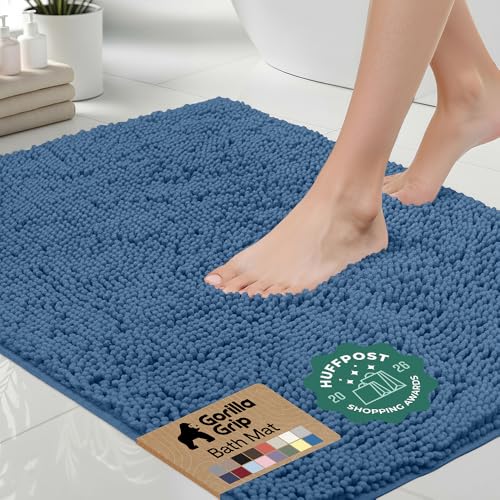
Best Value
GORILLA GRIP Bath Rug Mat
Full rubber backing that reviewers consistently note stays put on smooth tile through years of washing.
$17.99
Check Price on Amazon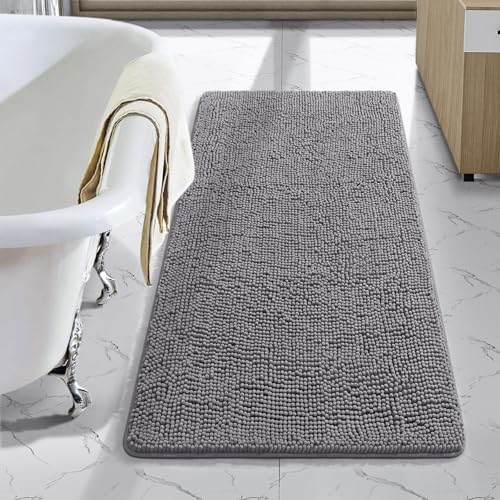
Premium Choice
LOCHAS Luxury Bathroom Rug Shaggy
Deep shaggy pile for shoppers who want the plushest feel and don't mind a longer dry time.
$22.92
Check Price on AmazonIs a bath rug or a bath matt better for a small bathroom?
A bath rug usually works better in a small bathroom because it covers more floor area for the same footprint and adds warmth underfoot.
Can you use a bath matt inside the shower and a bath rug outside it?
Yes, and that is the setup we recommend most.
Frequently Asked Questions
Is a bath rug or a bath matt better for a small bathroom?
A bath rug usually works better in a small bathroom because it covers more floor area for the same footprint and adds warmth underfoot. A rubber matt is worth keeping only inside the tub itself, where a rug cannot go.
Can you use a bath matt inside the shower and a bath rug outside it?
Yes, and that is the setup we recommend most. A suction-cup matt handles slip safety on wet porcelain, while a non-slip rug outside the tub absorbs drips and keeps your feet off cold tile.
Which lasts longer, a bath rug or a bath matt?
A rubber or vinyl matt typically outlasts a fabric rug because it has no fibers to wear down or trap moisture. A quality chenille or cotton rug still holds up for one to three years with regular washing.
Does a bath rug or a bath matt get moldy faster?
A bath rug is more prone to mold because it absorbs water into its fibers rather than shedding it. A rubber matt dries faster and resists mold better, though it still needs an occasional rinse to clear soap residue.
Is a bath rug or a bath matt cheaper to replace over time?
A budget bath rug like the Yimobra at $9.49 costs less upfront than most quality matts, but you will replace it more often. A rubber matt costs more initially and lasts several rug replacement cycles, so total cost evens out over three to four years.
Final Verdict
The bath rug vs matt decision comes down to two different jobs rather than one winner, since each solves a separate problem in the same bathroom. A rug handles comfort and absorption outside the tub, while a matt handles grip and drainage inside it. If you have to pick one purchase to make today, our top overall pick for the outside-the-tub floor is the GORILLA GRIP bath rug at $17.99, thanks to its full rubber backing and durability across repeated washes. Pair it with a suction-cup matt for the tub itself and you have covered both jobs properly.